Low-security vs. High-security bollards: how to choose the right protection

Learn the main bollard types, when low-security is enough, when you need high-security, and what to consider before you buy.
Table of Contents:

Introduction
When you are planning a new security project, bollards can do a lot more than most people think. They can enhance curb appeal, guide vehicles, separate pedestrians from traffic, and, in high-risk environments, stop vehicles from becoming weapons.
In this article, we’ll break down the main types of bollards, what “low-security” vs. “high-security” really means, and the key questions to answer before you design your next bollard system.
Different types of bollards
Bollards are a type of security barrier used across many industries for everything from simple traffic guidance to stopping high-speed vehicle threats. Each type can be customized with different materials, finishes, and features, which makes bollards one of the most versatile physical security tools available today.
Below are common types of bollards and how they are typically used:
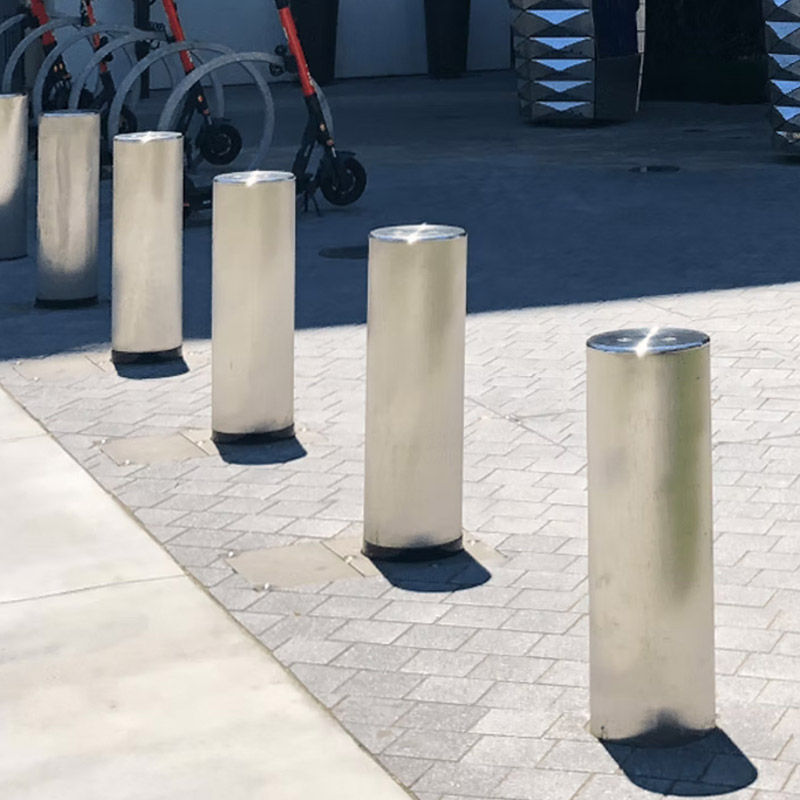
Storefront bollards: One of the most common types, these bollards are designed for low-security applications. They are typically smaller than high-security bollards and are widely used to protect the front of stores and other businesses.
Traffic bollards: These bollards are designed for fast and simple installation. They offer multiple customization options and are highly cost-effective solutions that still provide solid safety and security for lower-risk environments.
Fixed bollards: Permanently embedded underground, fixed bollards are long-term solutions. These bollards are often crash-rated for anti-ram protection, making them top choices for government buildings, military bases, and critical infrastructure.
Removable bollards: These bollards can be inserted into and removed from the ground, providing more flexibility in vehicle access control. Crash-rated options make them ideal for properties like parks, public parking lots, and churches, where access needs change.
Retractable bollards: Like fixed bollards, retractable bollards can provide high levels of protection, but they retract into the ground when not needed, sitting flush with the surface and rising above ground as required.

Low-security vs. high-security bollards
When it comes to choosing the most effective type of bollard for any business or facility, the biggest driver is the level of protection needed. Is your primary use going to be directing traffic or preventing access? If access prevention is the goal, are you concerned about accidental collisions, intentional vehicle-as-a-weapon attacks, or both?
Low-security applications
Low-security bollards are typically used where the primary goal is traffic control and pedestrian safety, not stopping a deliberate vehicle attack. Think residential properties, smaller retail stores, and commercial shopping areas, where the focus is on keeping people safe and vehicles where they belong.
For these environments, storefront bollards and traffic bollards are go-to choices. They are easy to install, offer strong protection from accidental vehicle impacts, and help keep pedestrians and storefronts protected.
Storefront bollards are perfect for:
Creating a physical barrier between pedestrians and vehicles to improve safety
Preventing cars from accidentally driving onto sidewalks or into storefronts
Deterring criminals from attempting smash-and-grab or vehicle-ramming style break-ins
Traffic bollards offer:
An effective way to direct traffic flow at entrances and parking lots
A way to restrict unauthorized access to specific drive lanes or areas
Help in managing pedestrian zones in busy environments
High-security applications
High-security bollards are used where the stakes are higher and vehicle threats are more serious, such as critical infrastructure, government buildings, military bases, data centers, and other sensitive facilities. In these environments, traffic control and pedestrian safety still matter, but the top priority is stopping intentional vehicle attacks and protecting mission-critical assets.
In high-security applications, the specific bollard type (fixed, removable, retractable) matters less than its tested performance. Crash-rated bollards, especially those with M30/P1 or M50/P1 certifications, are designed and tested to stop defined vehicle weights at specific speeds with limited penetration.
High-security bollards typically offer:
The highest level of anti-ram vehicle protection
Seamless integration with other physical security elements and controls
Advanced access control solutions for authorized vehicles
Crash-rated bollards are independently tested to prove how well they can stop a vehicle at a given weight and speed. These ratings help you match your bollard system to the real risks at your site.
The highest commonly used certification is M50/P1, which means the bollard can stop a 15,000‑pound vehicle traveling 50 mph with no more than three feet of penetration past the bollard. Most high-security bollards are rated M30/P1 or M50/P1, depending on the risk profile and protection requirements. For a deeper dive on crash ratings, see our article: “Crash Ratings for Barriers Explained: Understanding the Differences.”
Key considerations when choosing bollards
Regardless of the type of bollard system you choose, there are several key factors to consider before deciding.
1. Threat level and protection needs
The level of protection needed should be your first consideration. Low-security scenarios generally do not require crash-rated bollards. High-security needs almost always involve crash-rated bollards, and a formal risk assessment to evaluate vulnerabilities, threat types, vehicle approach speeds, and potential attack scenarios. Understanding your risk helps you determine whether low-security or high-security solutions are appropriate.
2. Professional assessment and design support
Partnering with a physical security integrator is valuable for both low and high-security needs. A qualified partner can perform a professional security assessment to identify unique vulnerabilities and threats, then develop a security strategy that addresses your specific risks and recommends solutions that effectively and reliably mitigate them.
3. Bollard spacing and layout
Bollard spacing plays a pivotal role in overall effectiveness, especially in high-security applications. It is critical to understand and follow manufacturer recommendations for spacing and pattern. Failing to do so can severely reduce system performance and leave openings for vehicles to slip through or compromise protection.
4. Aesthetics and customization
One of the biggest advantages of bollards is how easily they can be customized to enhance the look and feel of a site. They can be specified in different colors, paired with decorative bollard covers, and fitted with different top styles. Lighted bollards offer color-changing LED options that improve visibility and add architectural interest. There are many ways to enhance the aesthetics of your site while increasing security.
5. Integration with a broader security ecosystem
Last but not least is the importance of integration. Bollards can be integrated with solutions like automated gates, security fencing, access control systems, and intrusion detection to create a highly effective layered security approach, which is critical for high-security strategies. Even in lower-risk environments, integrating bollards with other systems helps streamline access, improve threat response, and strengthen overall security posture.

Conclusion
Bollards are one of the most flexible physical security tools you can deploy. With the right design, they can support your safety, access control, and aesthetic goals at the same time, whether you are protecting a storefront, a campus, or critical infrastructure. With a bit of upfront planning and the right guidance, it is very possible to find the bollard system that fits your unique risk profile and site requirements.
If you are evaluating bollards for an upcoming project, check out our Bollards Buying Guide for a deeper dive into categories, comparison charts, pricing guidelines, and total cost of ownership details. You can also connect with IronSite to schedule a security assessment and get a bollard plan tailored to your site.
IronSite is a national physical security provider with specialized expertise to deliver premium solutions at scale, including tailored strategies for gated communities and residential developments. Our extensive family of brands nationwide enables responsive and consistent service and support wherever your properties are located.
Media Contact
Terin Pickett
IronSite
1595 E. 6th St; Suite 101
Corona, CA 92879


Comments