Security Convergence 101: What to Know About Cyber-Physical Security

How physical and digital threats merged into one – and what your security strategy needs to do about it.
Table of Contents

Key Takeaways:
Security convergence is the merging of physical and digital security into a single, unified strategy.
It matters because most modern security equipment is IoT-connected – a physical device can now be a digital entry point, and a cyberattack can now control physical equipment.
IoT devices face an estimated 820,000 attacks per day worldwide, and industrial IoT attacks have risen roughly 75% over two years.
A converged strategy delivers unified identify and access management, automated threat response, and better-prepared staff.
Success depends on unified policies, integrated platforms, cross-training, and ongoing assessment — ideally guided by a professional integrator.
Threats to businesses grow more sophisticated every day, and the line between physical and digital risk has all but disappeared. The two have merged, forcing security teams to modernize their strategies and combine physical and digital protection into a single cyber-physical approach. The stakes are real: IoT devices now face an estimated 820,000 attacks per day worldwide, and the average data breach reached $4.9 million in 2025 according to IBM. This article explains what security convergence is, why it matters, and what you can do to protect your organization from today’s most advanced threats.
What is security convergence?
Security convergence is the merging of physical security and digital security practices into one unified strategy. Historically, physical and cyber teams operated separately — but advances in technology and increasingly sophisticated attacks mean today’s threats affect both physical assets and digital data at the same time.
This has accelerated the need for security leaders to rethink their approach and design processes that unify both teams. Eliminating siloed teams allows organizations to mitigate threats more effectively, improve incident response, and strengthen overall security posture.
Why does security convergence matter?
Most modern security solutions are Internet of Things (IoT) compatible. When physical security equipment connects to the internet, physical and digital risk overlap — creating new entry points for cybercriminals. A cyberattack can now let criminals control physical equipment, while a physical breach can open the door to a network compromise.
In practice, attackers can move into a company’s network through a vulnerable physical device, digitally breach equipment that controls access points, or even compromise an entire perimeter of connected security solutions with the right access.
Cyber-physical threats can create serious problems for any business, including:
Direct threats to employee and pedestrian safety
Severe financial loss and extended downtime
Legal and regulatory repercussions
Operational damage and business disruption
Businesses that adopt a holistic approach, combining physical and digital strategies into one, have the best chance of repelling today's biggest threats.
Physical vs. digital security solutions
Understanding convergence starts with understanding the two categories it brings together.
Physical security solutions
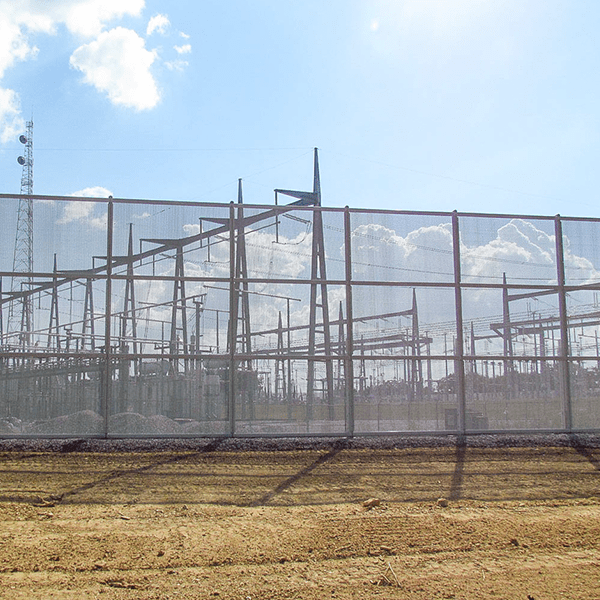
Physical security solutions protect people, property, and perimeters. There is no shortage of options, with varying levels of protection, designs, and materials to suit nearly any operation. Common examples include:
Automated Gates: control entry and exit points by managing who can enter a perimeter, community, site, or property
Security Fencing: deters and denies access to the perimeter. Chain link, decorative wrought iron, aluminum, and concrete designs offer wide flexibility
Security barriers: used in medium to low high-security scenarios to stop people or vehicles. Types include bollards, wedge barriers, rising beams, and drop arms, with crash-rated options available.
CCTV Cameras: the eyes of a perimeter, capturing footage of suspicious or criminal activity and giving security teams a real-time view that improves response times.



Digital security solutions
Digital security solutions rely on digital networks, cloud connectivity, and analytics for added protection. Many are physical devices that become digital solutions once IoT functionality is added. Common examples include:
Biometric scanners: authenticate identity through a unique trait such as fingerprint, iris, or facial recognition, and are widely used in access control.
IP-connected cameras: high-definition cameras connected to a network or cloud server that stream digital video over Ethernet or Wi-Fi, with no coaxial cabling required.
Smart access control: network-connected systems that operate entry points and log audits in real time, using smart cards, mobile tokens, and fobs.
How do physical and digital security work together?
As physical security solutions joined the Internet of Things, they evolved into cyber-physical systems. Modern cameras, sensors, alarms, and intrusion detection now connect to the internet as a basic feature. This improves monitoring and incident response — but it also introduces new vulnerabilities that must be accounted for.
Consider a cyber-physical access control system: an employee taps a physical card reader to authenticate and enter a secured area. Connect that system to the network, and the same keycard can grant access to company systems and resources. The convenience is real, but so is the risk — a lost or stolen keycard now exposes the network, which means additional protections are required.
A converged, cyber-physical approach enables:
Unified identity and access management: the physical token that authenticates a user can also govern network access, and that access can be revoked instantly when needed.
Automated threat response: AI-equipped cameras can monitor for physical anomalies and network irregularities, then automatically lock doors or block entry points while alerting security personnel.
Better-prepared staff: employees trained in both physical and cyber practices, including social engineering, phishing, and malware, support a more holistic security posture.
Benefits of cyber-physical security
Businesses that adopt a cyber-physical strategy see a stronger overall security posture and more streamlined processes. Eliminating siloed departments produces a genuinely holistic approach to protection.
Above all, convergence provides visibility into physical breaches and digital attacks simultaneously. That shared visibility encourages unified policies, closes the information gaps that criminals exploit in disconnected systems, and builds more resilient security functions — better preparing teams to identify, prevent, mitigate, and respond to threats.
It also streamlines detection and response. Coordinated teams react faster, know exactly where to respond, and make more informed decisions about containing damage — then evaluate what went wrong so it doesn’t happen again.
How to implement a converged security strategy
A cyber-physical strategy dramatically improves protection, but building one around your site’s specific vulnerabilities is rarely straightforward. Skipping the due diligence simply leaves your business exposed. The following factors matter most.
Work with a professional integrator
A professional integrator brings the specialized expertise to assess a site and recommend the right solutions. They also know how to:
Account for and work around excavation limitations
Factor in weather and climate conditions
Meet local, state, and federal regulations to maintain compliance
Establish unified policies
Whether or not you use an integrator, unified policies should top the priority list. Shared protocols for access control, user authentication, and incident response are critical to eliminating physical and digital silos. Deploying zero-trust architecture is a strong example — especially as physical and digital access rights are increasingly verified and logged together.
Integrate systems onto one platform
Consolidating physical surveillance, access control, and IT network logs into a single platform strengthens detection and response. When systems correlate physical access logs with network anomalies, the payoff is immediate: if an employee’s keycard opens a door at the same moment a compromised login appears from an overseas IP address, security teams get an instant red flag to investigate. Unified data also surfaces cascading effects — such as a physical breach triggering an unusual network event.
Cross-train your teams
Merging physical and digital security takes work and training. Cross-training between teams creates knowledgeable personnel who know exactly how and when to escalate threats, turning a reactive posture into a proactive one.
Assess continuously
Ongoing assessment is essential. Regularly evaluating your site for vulnerabilities keeps equipment and processes current and your operation protected. As attacks grow more sophisticated, security strategies must adapt to keep pace.

Conclusion
Despite the rise of cyber-physical attacks, many businesses still rely on segmented teams to address an increasingly integrated threat. Building a cyber-physical security strategy is not easy — but if you take the time to do it right, you’ll protect your business, your employees, and everything around them. If you need help getting started, reach out; we’re here to make your next security project a success.
Frequently asked questions
What is security convergence?
Security convergence is the integration of physical security and cybersecurity into one unified strategy and, often, one team. It exists because connected (IoT) devices have merged physical and digital risk, so the two can no longer be managed in isolation.
What is a cyber-physical system?
A cyber-physical system is a physical security device — such as a camera, sensor, alarm, or access reader — that connects to the internet and integrates with digital networks. This improves monitoring and response but also creates new cyber vulnerabilities.
Why is security convergence important?
It is important because an internet-connected physical device can become a network entry point, and a cyberattack can take control of physical equipment. A converged strategy gives security teams visibility into both threat types at once and closes the gaps that disconnected systems leave open.
How do you implement a converged security strategy?
Start with unified policies for access, authentication, and incident response; integrate physical and digital systems onto one platform; cross-train teams across both disciplines; and assess continuously. Many organizations work with a professional security integrator to design and deploy the strategy.
About IronSite
IronSite is a national physical security provider with the specialized expertise to deliver premium, integrated security solutions at scale. Our nationwide family of brands enables responsive, consistent service and support for clients wherever they operate. Contact us to start your next project.
Sources: IBM Cost of a Data Breach 2025; Verizon Data Breach Investigations Report 2025; industry IoT threat analyses (2025–26).


Comments