Explore the Different Types of Security Fencing: Protect Your Property Effectively

Explore the different types of security fencing, how they protect your property, and what to consider before choosing your next fence.
Table of Contents:

Introduction
Security fencing is a critical component of any perimeter security strategy, serving as the first line of defense for commercial and industrial facilities. When integrated with other security measures like access control systems, vehicle barriers, and surveillance cameras, fencing enhances protection against unauthorized vehicle and pedestrian access.
In this guide, we’ll cover the main types of security fencing, crash ratings, visibility vs. privacy considerations, pricing factors, and key questions to ask before installing a fence. This ensures you choose the most effective solution for your facility.
Types of Security Fencing
Businesses face numerous options when selecting security fencing. The type of fence, the materials it’s made from, and the level of protection it provides all matter. Below are the most common types:
Fence Type | Description | Common Use Cases |
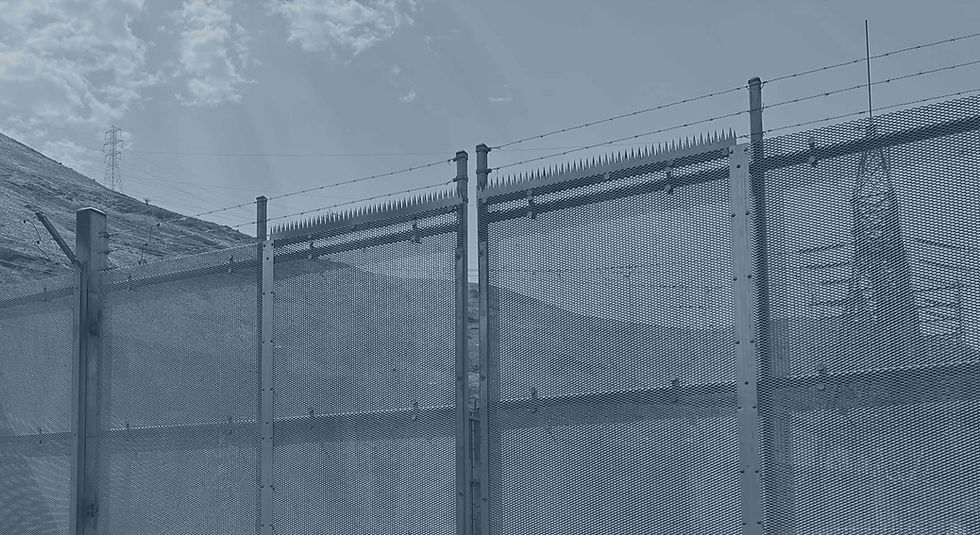
Anti-Climb Fencing | Tight mesh design made from galvanized steel wire with small openings to prevent climbing. | Data centers, government/military facilities, commercial properties. |
Anti-Cut Fencing | Heavy-gauge welded steel wires, extremely difficult to cut by hand. | Utilities, industrial plants, sensitive government sites. |
Crash-Rated Fencing | High-strength galvanized steel, anchored in concrete, tested to withstand vehicle impacts. | High-security commercial or industrial sites requiring anti-ram protection. |
Ballistic-Rated Fencing | Uses ballistic-grade fiberglass panels and steel plates to protect against firearm projectiles. | Airports, power plants, embassies, military bases. |
Materials: Steel and aluminum are standard, but vinyl, composite, and wood are sometimes used for low- to medium-security installations. The choice depends on your facility's protection requirements.
Crash-Rated Protection Explained
Crash-rated fencing is tested to stop vehicle attacks and is certified to ASTM standards (F2656-20). Ratings include speed (M) and penetration (P):
Speed Rating (M) | Vehicle Type | Speed |
M50 | 15,000 lb truck | 50 mph / 80 kph |
M40 | 15,000 lb truck | 40 mph / 65 kph |
M30 | 15,000 lb truck | 30 mph / 48 kph |
Penetration Rating (P) | Distance Vehicle Travels Upon Impact |
P1 ≤ 3.3 feet | P1 ≤ 3.3 feet |
P2 3.31 – 23 feet | P2 3.31 – 23 feet |
P3 23.1 – 98.4 feet | P3 23.1 – 98.4 feet |
P4 > 98.4 feet | P4 > 98.4 feet |
Top-rated fencing: M50/P1 – stops a 15,000 lb truck traveling 50 mph with less than 3.3 feet penetration. For more details, see our Crash-Ratings Explained guide.

Visibility vs. Privacy
Choosing between visibility and privacy impacts fence type and placement:
High Visibility: Supports surveillance and deterrence.
Examples: ornamental iron, chain link.
High Privacy: Limits visual access, enhances protection.
Examples: corrugated metal, solid wall fencing.
Consider your facility’s security priorities and surveillance setup when making this choice.
The Role of Fencing in Perimeter Security
Security fencing is often the most visible part of a perimeter security system. A well-designed fence:
Deters intruders through physical barriers (anti-climb, anti-cut).
Supports surveillance monitoring and access control.
Adds aesthetic value without compromising security.
Integrates with gates, vehicle barriers, intrusion detection, and CCTV systems.
Tip: Fencing alone isn’t enough, combine it with alarms, cameras, and controlled access for full perimeter security.
Pricing Factors
The cost of security fencing depends on:
Fence type and length
Materials: steel, aluminum, vinyl, composites
Security rating: crash-rated or ballistic-rated
Integration: gates, cameras, alarms
Installation challenges: soil, slope, utilities, weather conditions
Service & maintenance: preventative inspections, repairs, lifetime costs
Tips for budgeting:
Preventative maintenance programs reduce costly repairs and downtime.
Comparing providers can help find flexible pricing while ensuring high-quality installation.
Key Considerations Before Buying
Before selecting fencing, ask:
What level of protection is required?
Higher-security needs limit customization options but maximize protection.
What are site conditions?
Slopes, underground utilities, and soil type may require specialized panels, footings, or retaining walls.
Will fencing integrate with other security systems?
Consider automated gates, turnstiles, vehicle barriers, CCTV cameras, and alarm systems. Ensure wiring, power, and clearances are accounted for.
Material and design preferences:
Balance security with aesthetics and budget constraints.

FAQs About Security Fencing
Q1: What is crash-rated fencing?
A: Fencing tested to ASTM standards for vehicle impact resistance, designed to prevent unauthorized vehicle access.
Q2: What’s the difference between anti-climb and anti-cut fencing?
A: Anti-climb fencing prevents intruders from climbing over; anti-cut fencing uses welded steel to resist cutting attempts.
Q3: How much does security fencing cost?
A: Costs vary based on length, material, security rating, and installation complexity. Budget for both installation and ongoing maintenance.
Q4: Can fencing be integrated with other security systems?
A: Yes, fencing can work with gates, alarms, cameras, and vehicle barriers for a fully integrated perimeter security solution.
Check Out Our Buying Guide
For a deeper dive into choosing the right security fence for your facility, visit our Security Fences Buying Guide. It’s designed to help you make informed decisions and plan your perimeter security with confidence.
Key Takeaways
Security fencing is a core part of any perimeter strategy.
Crash-rated, ballistic, anti-climb, and anti-cut fences serve different protection needs.
Materials, visibility, privacy, and integration affect both cost and effectiveness.
Proper planning, maintenance, and expert guidance ensure maximum security for your facility.
IronSite is a national physical security provider with specialized expertise to deliver premium solutions at scale. Our extensive family of brands nationwide enables responsive and consistent service and support for all our clients wherever they may be.
Media Contact
Terin Pickett
IronSite
1595 E. 6th St; Suite 101
Corona, CA 92879


Comments