Physical Security Best Practices for the Logistics Industry in 2026

How to protect your warehouses, fleets, and supply chain from today's most costly logistics related security threats.
Table of Contents:

Key Takeaways
Cargo theft losses reached an estimated $725 million in 2025 — a 60% jump over 2024 — making physical security a bottom-line priority for logistics operators.
A layered security approach — one that deters, detects, denies, delays, and defends — is the most effective defense because no single tool is 100% reliable.
The core physical security layers for logistics are fencing, automated gates, access control, intrusion detection, and crash-rated barriers.
Integration matters more than any individual product: connected systems create a resilient supply chain, not isolated point solutions.
Ongoing assessments, maintenance, and an emergency response plan keep protection effective as threats evolve.
Logistics is one of the most heavily targeted industries in the economy. With high-value goods constantly moving between facilities and across open roads, warehouses and fleets present an unusually large and visible attack surface.
According to Verisk CargoNet, estimated cargo theft losses reached nearly $725 million in 2025, a 60% increase over the prior year, as organized crime groups concentrated on high-value shipments. The American Transportation Research Institute estimates cargo theft costs the freight industry roughly $18 million every day, with about 74% of stolen goods never recovered.
While ransomware and data breaches dominate headlines, the physical layer remains the foundation of supply chain security — and increasingly, physical and digital threats converge on the same operation. This article explains the role physical security plays in logistics, the core solution types, the best practices for deploying them, and the critical factors that keep a security strategy effective over time.
What role does physical security play in logistics?
Physical security is the primary defense against the physical threats facing a supply chain — cargo theft, tampering, and facility disruption. When implemented correctly, it is the backbone of supply chain integrity.
It also protects the bottom line by securing high-value goods, preventing costly delays in moving freight, and reducing legal liability and fraudulent damage claims. The most effective approach is layered security — a strategy that deters, detects, denies, delays, and defends against threats so that a failure in any one control does not expose the entire operation. Building that strategy is rarely straightforward and requires deliberate planning.
Types of physical security used in logistics
There is no shortage of physical security solutions; the real challenge is selecting the right combination for your specific operation. The most common solutions used in logistics today include the following.
Perimeter security fencing
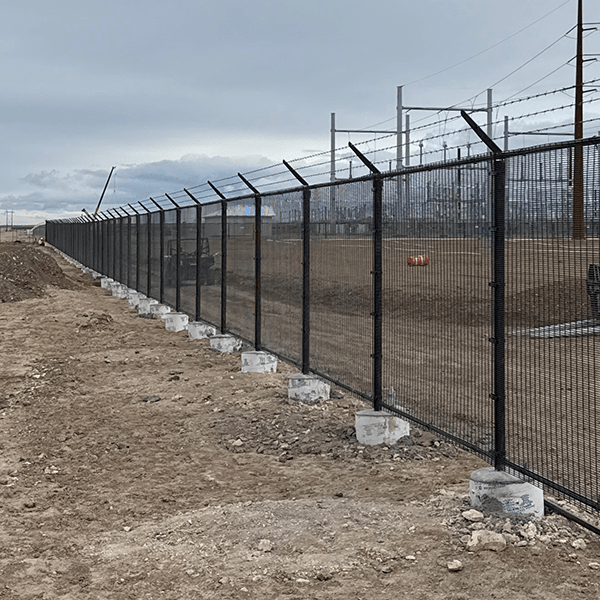
Security fencing protects the outer perimeter of a facility or warehouse. Anti-climb and anti-cut designs add protection against intrusion, and crash-rated fencing is available for high-security scenarios.
Automated gates
Automated gates manage facility access by providing secured, controlled entry points around the perimeter. They are highly customizable in material, size, and functionality, making them adaptable to almost any site layout.
Access control
Access control systems — including keycards, biometrics, and video intercoms — manage who can enter specific areas on site. By validating user credentials before granting entry, they prevent unauthorized access and streamline movement across the property.
Intrusion detection
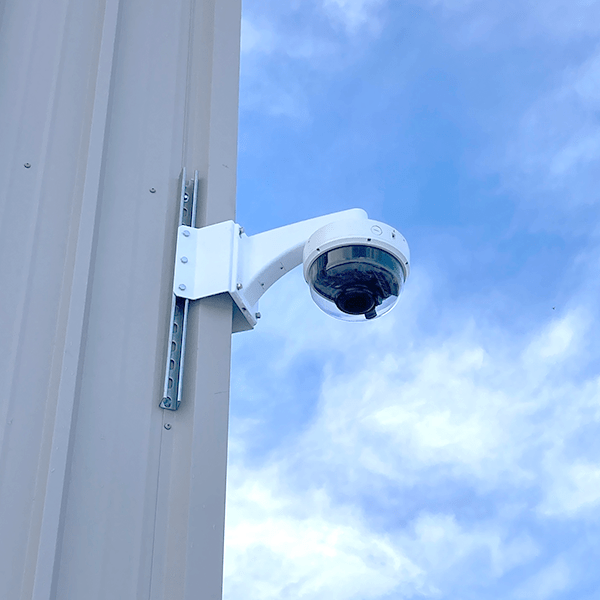
Intrusion detection covers CCTV cameras and alarm systems that provide real-time monitoring. Automated alerts tied to specific activity improve incident response times and minimize damage in the event of a breach.
Crash-rated security barriers
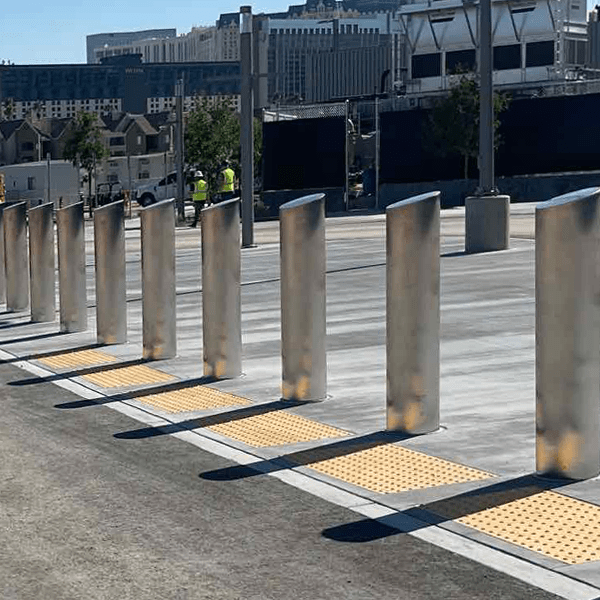
For high-security scenarios, crash-rated barriers — such as bollards, wedge barriers, drop arms, and rising beams — provide the utmost protection against vehicle-borne threats.
Integration is the multiplier. Choosing the right solutions matters but integrating them matters more. Connected systems create a layered defense and a resilient supply chain that protects valuables, reduces operational downtime, and keeps goods flowing without interruption.

Physical security best practices for logistics
1. Secure warehouses and high-value facilities first
Facilities that house high-value inventory should top the priority list. Effective perimeter security:
Deters break-ins and internal employee theft
Prevents supply chain disruption and cascading delays
Provides a safe work environment and supports regulatory compliance
Securing warehouses and critical facilities reduces both the chance of a breach and the costly consequences that follow. The priority is matching solutions to your specific security strategy.
2. Track inventory in transit
Outside the warehouse, protecting cargo on the move is equally important. Equipping fleets and shipping containers with sensor alarms and GPS enables real-time location tracking and immediate alerts for cargo damage, route deviations, or unauthorized access. Avoiding high-risk zones and using pre-approved routes further reduces exposure, and high-security cargo seals add a final layer of protection.
3. Manage workforce and personnel access
Equipment alone is not enough. Requiring visitors, vendors, and staff to present ID, log in and out of relevant systems, and wear visible badges is a critical part of effective access control.
Critical considerations for a logistics security strategy
Build in layers
A layered security approach is essential because no single tool is 100% effective. Layering eliminates single points of failure: a flaw in one control does not compromise the whole system, and different layers defend against different risks. Even if a breach occurs, practices like network segmentation and zero-trust access can still protect critical assets.
Assess regularly
Routine security assessments let businesses proactively identify and address vulnerabilities before they become incidents. Regular assessment is one of the best ways to keep security aligned with evolving threats.
Maintain equipment
Neglected equipment almost always leads to degraded performance, glitches, or outright failure. A preventative maintenance plan catches issues early and helps avoid costly repairs, replacements, and extended downtime.
Plan your emergency response
When something does go wrong, an emergency response plan helps contain the situation. Training personnel, establishing threat-specific protocols, and coordinating a joint response plan with local law enforcement and fire departments can be the difference between a contained incident and a full-blown breach.
Work with a professional security integrator
A professional integrator brings the specialized expertise to assess a facility and recommend tailored solutions. They know what to look for in assessments, understand excavation and climate limitations, and know how to maintain compliance — making them one of the most reliable paths to an effective strategy.
Conclusion
Securing a logistics operation is uniquely difficult: inventory is constantly in transit and highly visible, which makes the industry a prime target for sophisticated physical and cyber threats. With deliberate planning and a layered, well-maintained strategy, you can stay ahead of those threats and keep both assets and staff protected.
Frequently asked questions
What is the biggest physical security threat in the logistics industry?
Cargo theft is the largest physical security threat, with estimated U.S. and Canada losses reaching nearly $725 million in 2025. Organized crime groups increasingly target high-value shipments, pushing the average value per theft to roughly $274,000.
What is a layered security approach?
A layered security approach combines multiple controls — such as fencing, gates, access control, and surveillance — so that a weakness in one layer is covered by the others. It is built around five functions: deter, detect, deny, delay, and defend.
What are the main types of physical security for warehouses?
The core types are perimeter fencing, automated gates, access control systems, intrusion detection (CCTV and alarms), and crash-rated barriers such as bollards and wedge barriers.
Why hire a professional security integrator?
A professional integrator assesses a facility’s specific risks and designs an integrated system rather than a set of disconnected products. They account for site conditions, excavation and climate limitations, and regulatory compliance.

About IronSite
IronSite is a national physical security provider with the specialized expertise to deliver premium, integrated security solutions at scale. Our nationwide family of brands enables responsive, consistent service and support for clients wherever they operate.
Media Contact
Terin Pickett — IronSite
1595 E. 6th St, Suite 101, Corona, CA 92879
Sources: Verisk CargoNet 2025 Cargo Theft Analysis (Jan 2026); American Transportation Research Institute (ATRI) Cargo Theft Report (2025).


Comments